
Putting Strategy First | Brad Chase | Episode 172
The importance of strategy cannot be understated. You organization is like a ship and its strategy is the rudder. With out the rudder, the ship will sail in circles and ultimately go nowhere. With a steady rudder (strategy) and an experience Captain (you the leader) your ship will get to its destination. Sure there’ll be waves along the way, maybe a detour or two, but that is how you operate to achieve success.
Brad Chase has had a broad and extensive business career. He has advised leaders of businesses of many different sizes, from startups to Fortune 500 firms, and in many different kinds of markets, from mobile and education to enterprises and consumer services. Some of the companies he has worked with include GE, Telstra, VMware, Mozy (a subsidiary of EMC), Blucora, Sonos, Vizrea, and Crisply. He has also held leadership positions on the boards of many companies and nonprofit organizations, including Expedia, Ooyala, DreamBox, Brooks, Boys and Girls Clubs of King County, and The Nature Conservancy. As a public speaker, Brad has spoken about his particular theory on business strategy, Strategy First, to executives at large and small businesses, to incubators, at conferences, and to students at topflight MBA programs. Before consulting, board work, and speaking, Brad spent 14 years at Microsoft finishing his tenure as a Senior Vice President and Executive Officer managing a team of over 4,000. From April 1999 until mid-2002, Brad led MSN.com’s transformation from an unsuccessful internet service to the worldwide traffic and search leader. Under his leadership at MSN, search traffic, revenue, and internal team morale all more than doubled.
Ways to Control Chaos in Your Business | Susan Fennema | Episode 170

Chaos can destroy the best of organizations. It can rifle through them with unprecedented speed and destruction. As leaders, we need to ensure that we eliminate chaos when it occurs. However, it is even more important to ensure that we get ahead and stop the chaos from even starting in the first place.
Susan Fennema is the Chaos Eradicating Officer (CEO) of Beyond the Chaos, a consultancy helping small business owners to simplify their operations and manage their projects so they can grow their businesses and get their lives back. With 30+ years of operations/project management experience in professional service industries, Susan is on a mission to improve American society exponentially. When not making multi-course dinners, she enjoys Texas A&M football games and Blackhawks hockey. She lives and works from her home in McKinney, Texas, with her husband, dog, and cat.
Measure, Execute, WIN | Alex Castro | Episode 169
There’s no lack of good ideas in today’s business world, yet 50% of them are doomed to failure. Executives will often greenlight a strategic initiative based on a business case and financial analyses alone, with no idea whether their company has the ability to execute it successfully. But there’s a better way to make corporate […]
Leading Real Change | Jen Thornton | Episode 168

Change is hard for any organization. People are often adverse to change as they are comfortable in the ways which they live and work. However, in order to remain relevant and competitive in today’s world, change is essential. Therefore, as leaders it’s crucial that we lead the changes in our organizations the right way.
Lead a Quantum Lean Organization | Michael Sanders | Episode 167

Employees have lots of reasons to resist change, from apathy to fear. However, many employers miss the biggest reason their workforce might balk at change: Not all ideas for change are good and productive! 2020 is the year that no one saw coming, rife with business challenges from the pandemic, fires, political unrest, and more. America’s vulnerability to overseas suppliers is a strong argument for manufacturing to return to the United States. However, this will present significant challenges, as American companies try to attain the level of productivity of countries such as, for example, Japan, which has learned to streamline production into smaller footprints. Change is necessary if American manufacturing is to succeed.
How to Lead Through Negotiations and Conflict Resolutions | Kwame Christian | Episode 166
Negotiation and conflict resolution are often looked at as the difficult conversations and actions which leaders need to take. These are often uncomfortable conversations to have with our coworkers and subordinates; however, they are absolutely essential in order to ensure that our organization is an effective one. Therefore, we need to get past the uncomfortness […]
Win the Talent War | Mike Sarraille and George Randle | Episode 165
In our modern business landscape, the war for talent is more complex than ever. You need to attract and retain the best talent for your organization to win, but without the right strategy or mindset, you won’t be able to compete. If your revenue is declining, you’re losing market share to your competition, or your […]
How to Increase Productivity | Tim Ringo | Episode 164

Productivity makes or breaks peak performance in ourselves, our teams, and our organizations. However, since the development of more and more “productivity” tools there’s been a steady decline in productivity. Simply put, we are getting overwhelmed with everything which “must” be done to be productive. Productivity is about simplifying the process and enabling people to work in their zone of genius and not zone of failure.
How to Build Trust and Collaboration | Jill Ratliff | Episode 161
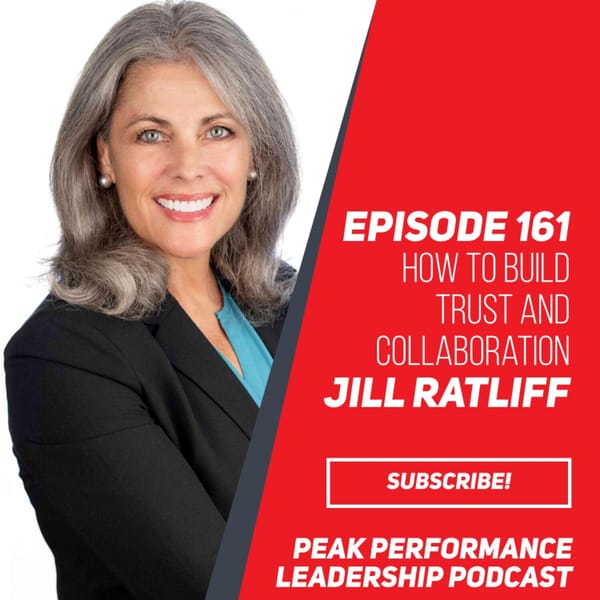
Among the most important skills in leadership are gaining trust and knowing how to collaborate under stress. A great leader is the kind of person others want to follow. They know how to break down silos and model collaboration. They have the courage to build meaningful relationships, and are experts at establishing trust and touching hearts, creating an environment where people feel heard, small problems don’t escalate, and businesses succeed.
Blend Your Culture, Strategy, and Execution | Dan Bruder | Episode 159
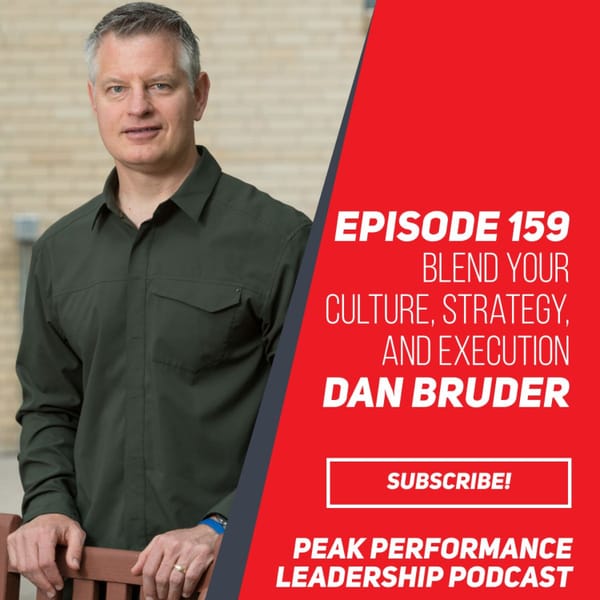
Competitive advantage and financial gain have become widely accepted strategic priorities for companies. Yes, many companies invest in professional development for employees and support volunteer and charitable programs. Yet, such efforts are rarely incorporated into the organization’s core focus, outcomes, and actions, let alone its true purpose for being in business. Putting competition and profits first not only devalues individual workers; it hurts the entire organization. With the outbreak of COVID-19, many people responded with anxiety and lost their motivation for working as their companies scrambled to adapt to the challenges, including managing a remote workforce. Focusing on problems and clinging to the goal of market dominance at all costs takes a toll on employees, customers, and their communities, as well as a company’s reputation and bottom line.